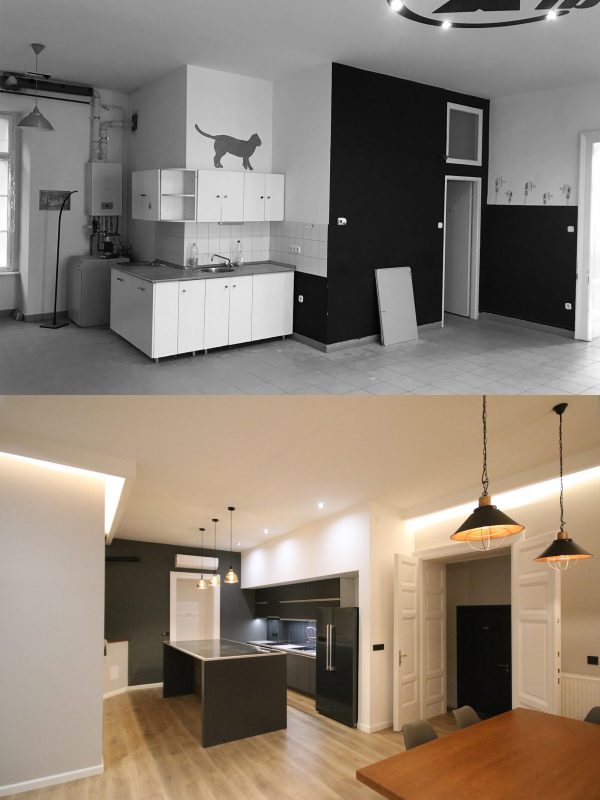
The Király Street project involved the complete transformation of a 171 m² apartment in the heart of Budapest into a contemporary co-living hostel environment. The existing condition presented a significant design challenge. Previously occupied as office space, the interior layout had become highly fragmented and inefficient, with poorly positioned bathrooms and kitchen areas that did not support a residential function.
The client’s vision was to create a luxury hostel atmosphere—an environment that combines the social energy of shared living with the comfort and quality of a carefully designed interior. To achieve this, the apartment was completely reconfigured and divided into six individual accommodation units organized around a generous communal living space.
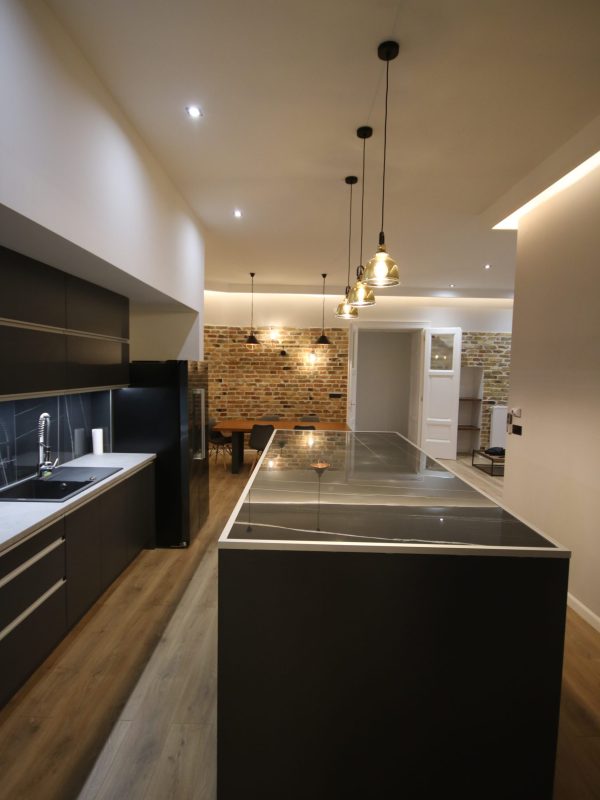
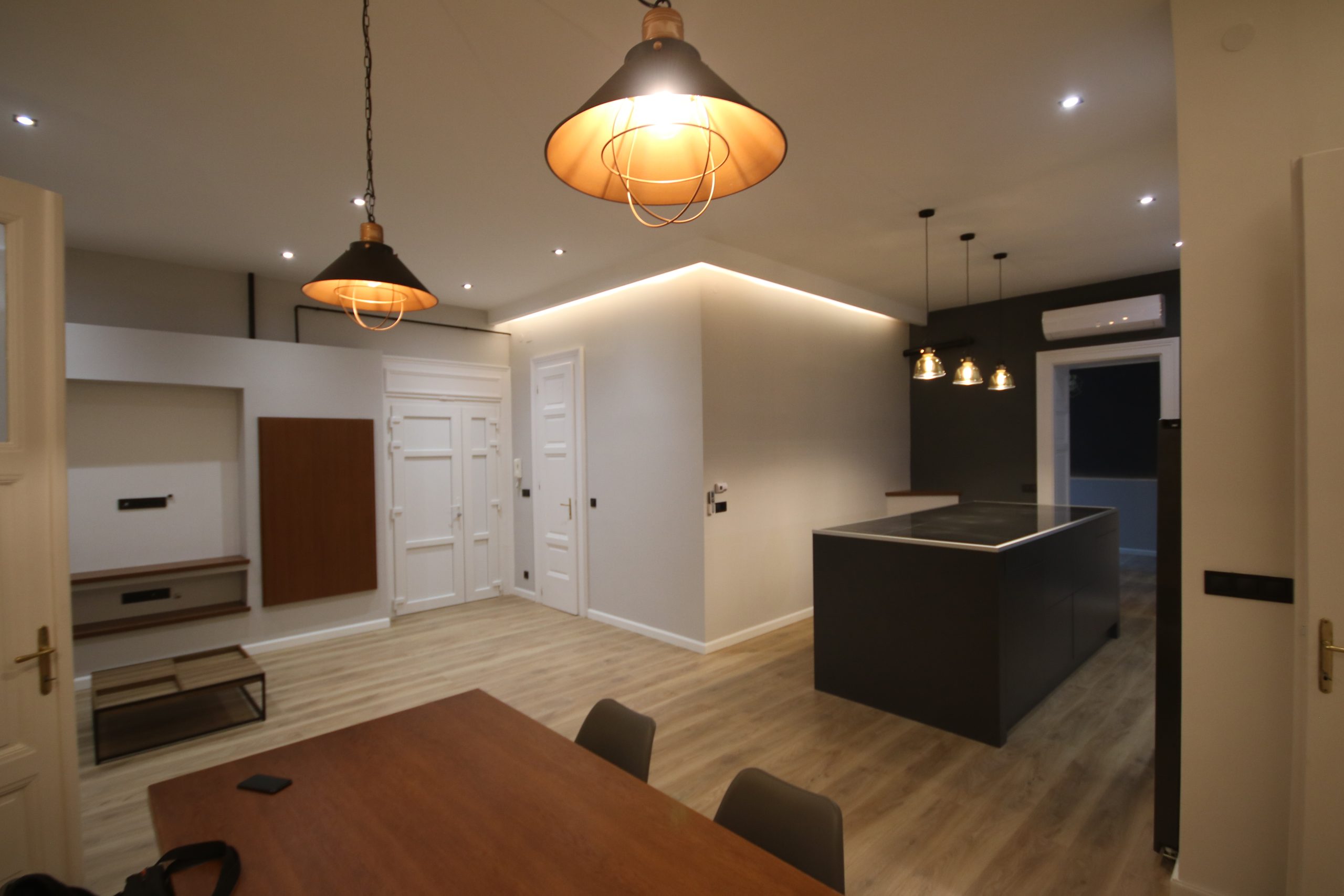
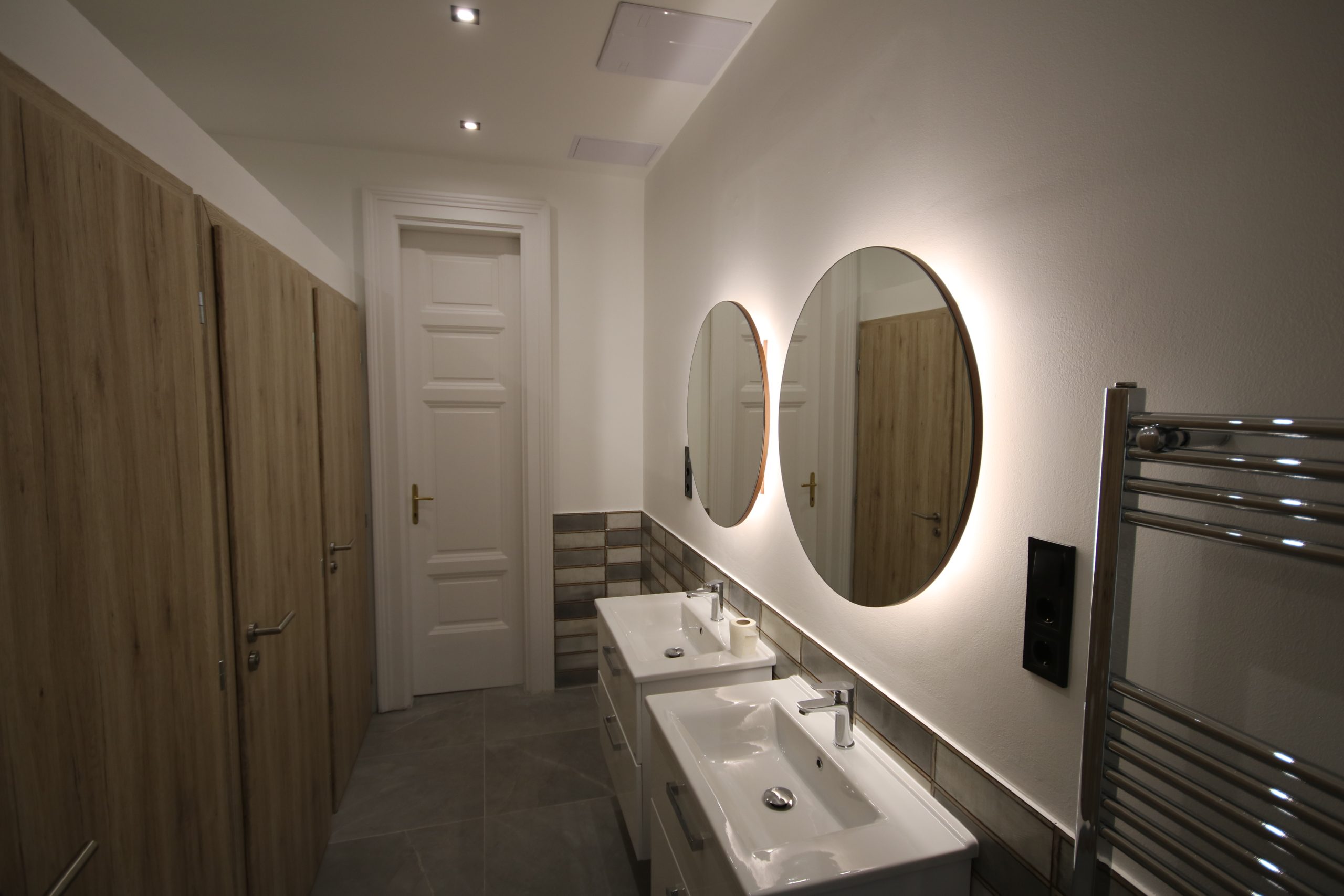
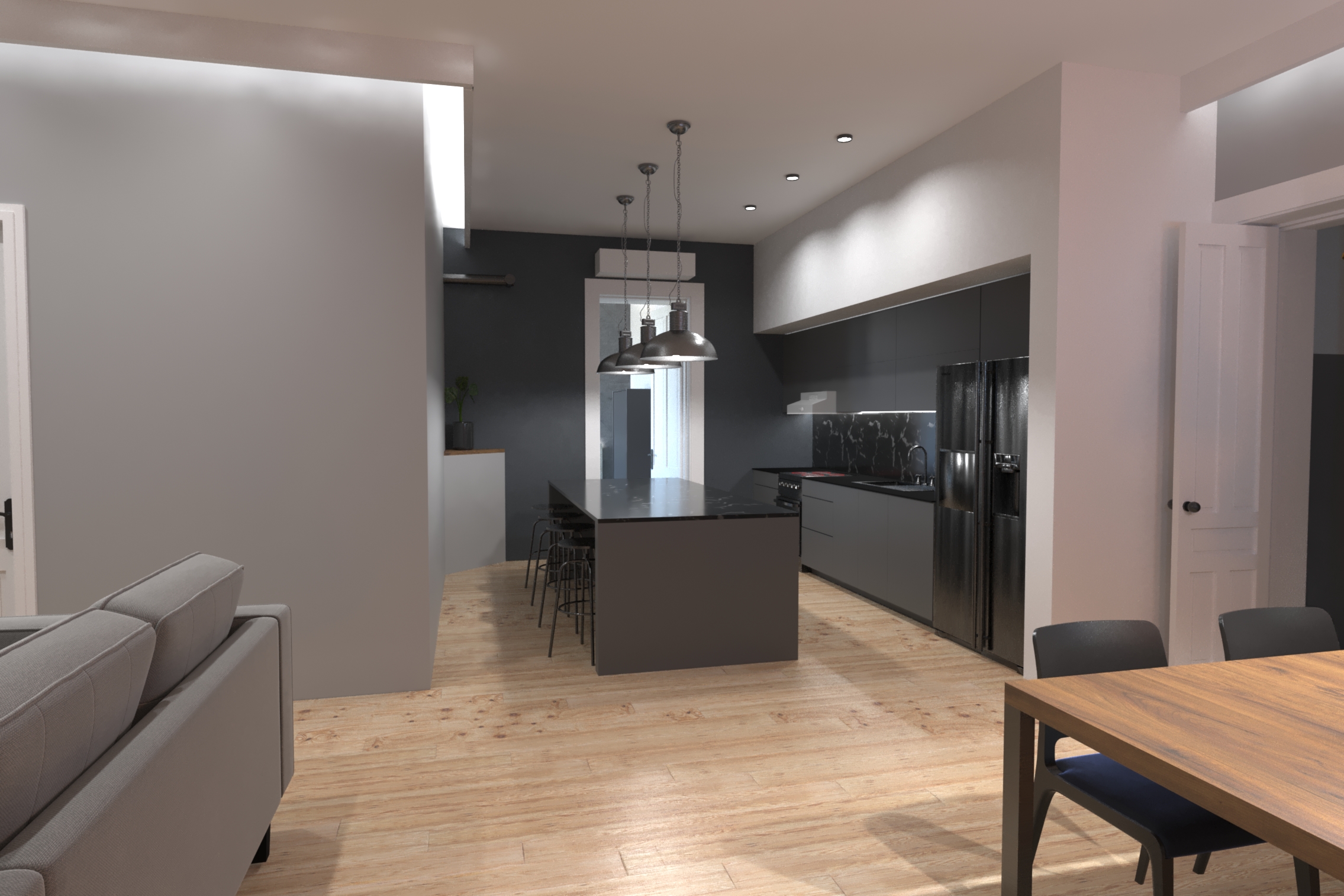
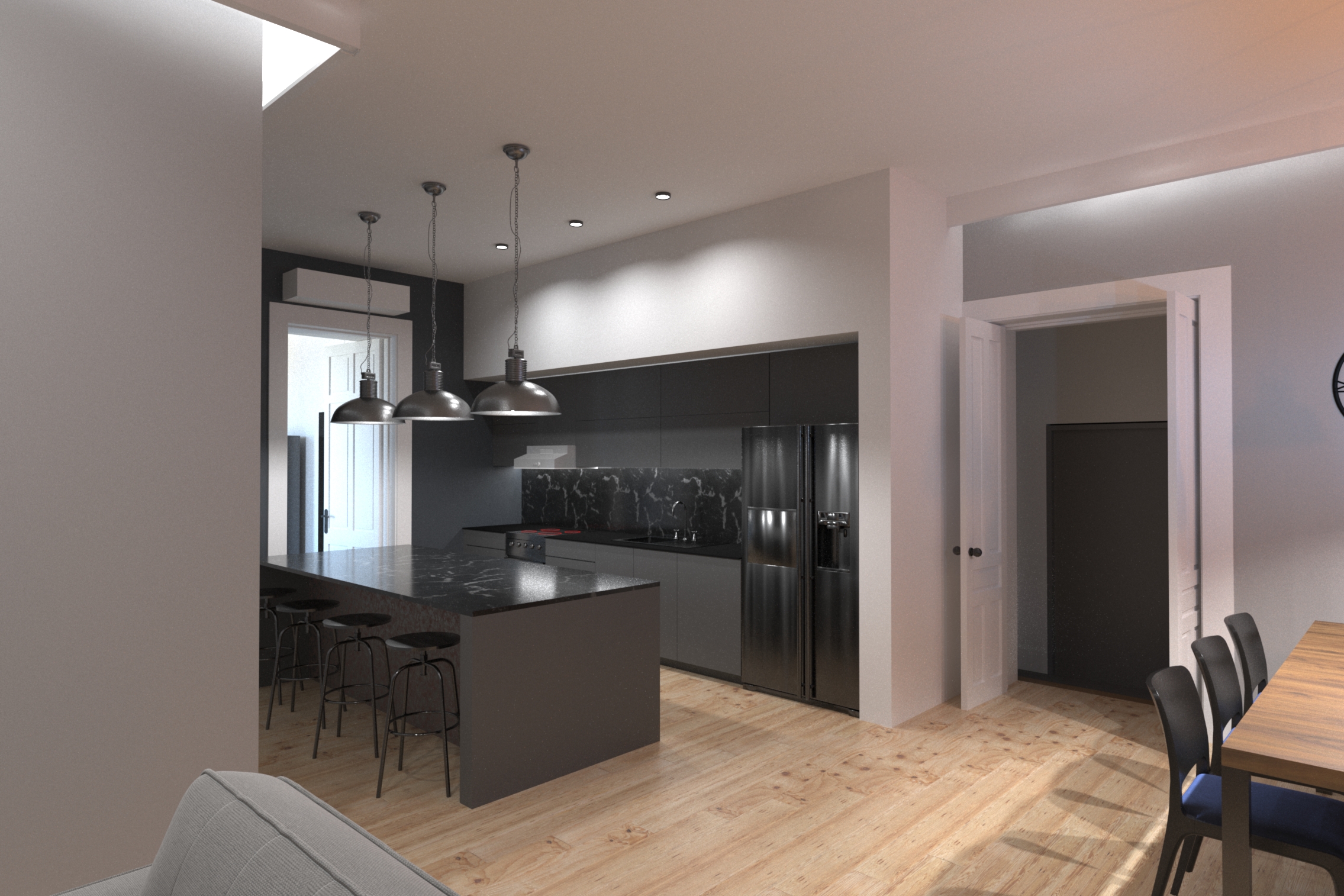
At the center of the project is a large common gathering area designed as the social heart of the hostel. This space integrates an open kitchen, dining area, and relaxed lounge environment where guests can meet, cook, and interact. Adjacent to this central hub is a spacious shared bathroom containing the main toilet facilities for residents.
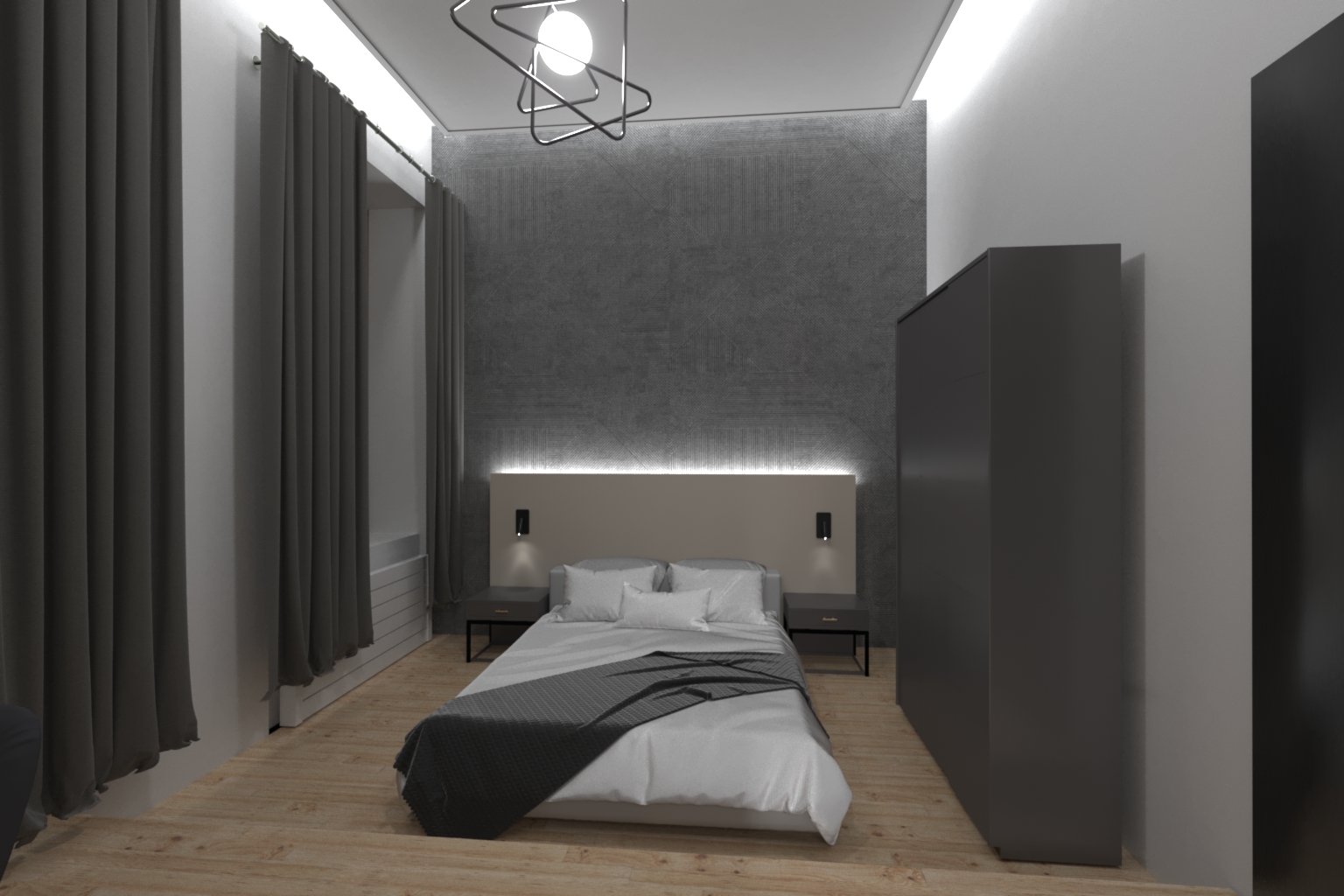
Two of the accommodation units were designed as larger, more luxurious rooms. The most prominent unit occupies the corner of the building and enjoys exceptional natural light through two large windows—two facing Király Street and two overlooking Nagymező Street with views toward the nearby church. The remaining units are more compact but carefully designed, each featuring a large window facing the street, with one unit oriented toward the internal courtyard.
To maximize the usability of the smaller rooms, each unit incorporates a mezzanine sleeping level, allowing the primary floor area to function as a compact living and study space. Every unit is also equipped with a private shower, while the main shared bathroom consolidates the toilet facilities in a single location for efficiency.
Lighting design played a crucial role in defining the atmosphere of the project, particularly within the central communal area. Layered lighting strategies highlight the open kitchen and gathering space, creating a welcoming focal point within the apartment.
The overall aesthetic draws from a modern industrial language that complements the character of the historic building. Warm wood-tone flooring, high ceilings, exposed spatial volumes, and carefully detailed bathrooms contribute to an interior that feels both contemporary and comfortable. Despite the spatial constraints of the original layout, the final design successfully balances privacy and community, creating a warm, social living environment for hostel guests.